Introduction
The Risk Treatment Plan feature in SAFE CTEM enables organizations to systematically reduce cyber risk by creating, prioritizing, and tracking remediation initiatives. It allows security teams to evaluate the impact of security improvements before implementation, compare different remediation strategies, and build structured treatment plans that align with business priorities.
Using Risk Treatment Plans, organizations can make informed investment decisions, demonstrate measurable risk reduction, and continuously monitor remediation progress.
Risk Treatment Plans are available under Projects.
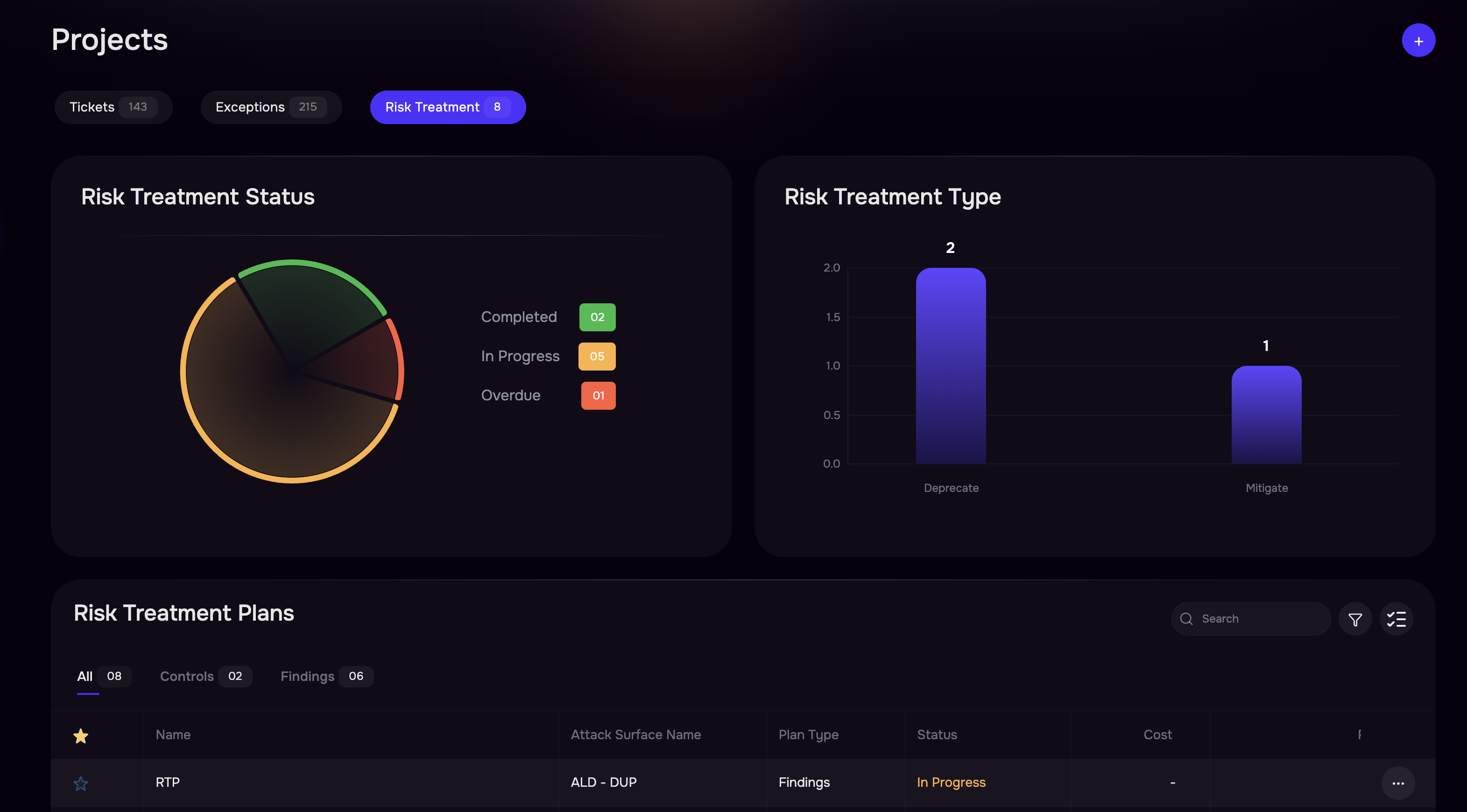
Why Use Risk Treatment Plans?
Risk Treatment Plans help organizations:
Create structured, actionable plans to reduce cyber risk.
Prioritize remediation activities based on risk reduction, business impact, and return on investment (ROI).
Simulate the impact of security improvements before implementation.
Track remediation progress over time.
Align cybersecurity investments with business objectives.
Demonstrate measurable improvements in organizational cyber resilience.
Core Concepts
Risk Treatment
Risk Treatment is the process of selecting and implementing actions to manage cyber risk. Within SAFE CTEM, treatment plans typically fall into one of the following categories:
Improve
Enhance the maturity of existing security controls to reduce organizational risk.
Examples:
Improve Multi-Factor Authentication (MFA) deployment
Strengthen Web Application Firewall (WAF) configurations
Increase endpoint detection coverage
Mitigate
Reduce the likelihood or business impact of identified threats by remediating vulnerabilities or implementing compensating controls.
Examples:
Patch critical vulnerabilities
Remove exposed internet-facing services
Harden cloud configurations
ROI and Cost-Benefit Analysis
Every Risk Treatment Plan includes a built-in cost-benefit analysis to help determine whether a proposed investment delivers sufficient value.
The analysis includes:
Estimated implementation cost
Expected reduction in Annual Loss Expectancy (ALE)
Overall risk reduction
Return on Investment (ROI)
This enables security leaders to prioritize initiatives that provide the greatest business value.

What-If Analysis
The What-If Analysis capability allows organizations to simulate security improvements before making actual changes.
Using What-If Analysis, you can:
Modify control maturity levels.
Change the remediation status of findings.

Evaluate the resulting changes in:
Likelihood
Loss Magnitude
Annual Loss Expectancy (ALE)
Compare multiple remediation strategies.
Save successful simulations as Risk Treatment Plans.

This helps organizations confidently select the most effective remediation approach before investing resources.