Introduction
A breach impact model is a structured framework used to estimate the potential financial and operational consequences of a cybersecurity breach. It quantifies the costs an organization may face across categories such as incident response, customer notifications, regulatory compliance, reputation management, and recovery efforts.
This model is critical because it:
Transforms cyber risk into financial terms that executives and boards can easily understand.
Supports informed decision-making on cybersecurity investments, insurance coverage, and resilience planning.
Enables scenario planning by comparing base-case and worst-case outcomes.
Builds confidence with regulators, insurers, and stakeholders by showing a transparent, data-driven approach to risk.
With this model, organizations can move beyond abstract threats and understand the real economic impact of breaches, aligning security strategies with business priorities.
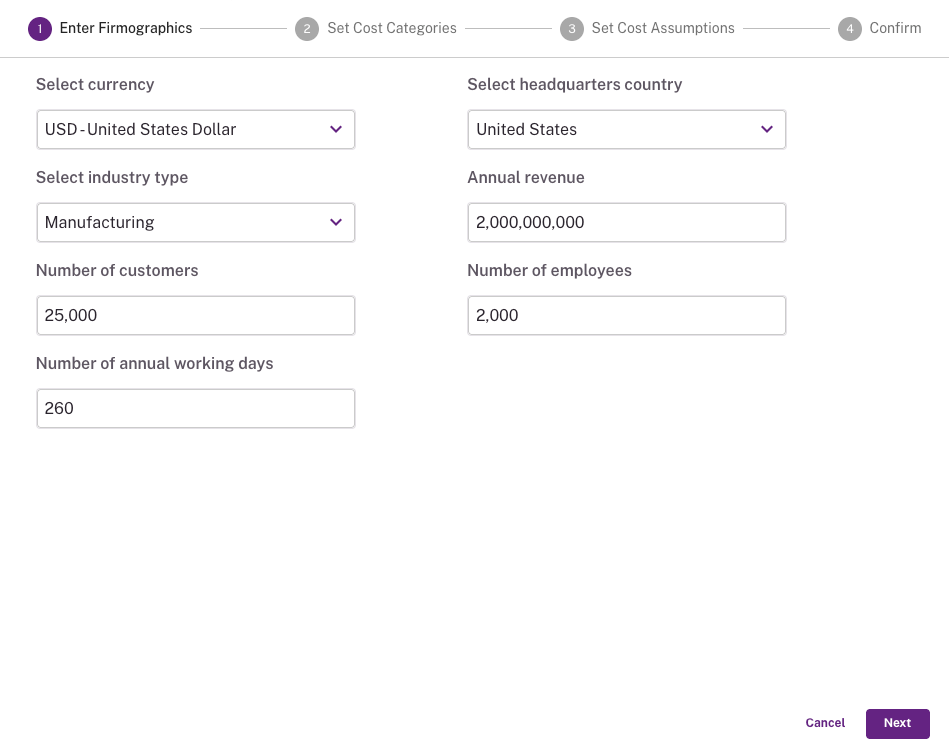
Step 1: Enter Firmographics
Firmographic inputs capture the organization’s size, industry, and operating profile to contextualize breach costs. These fields ensure the model scales impact estimates accurately across customers, employees, revenue, and daily operations.
Step 2: Set Cost Categories
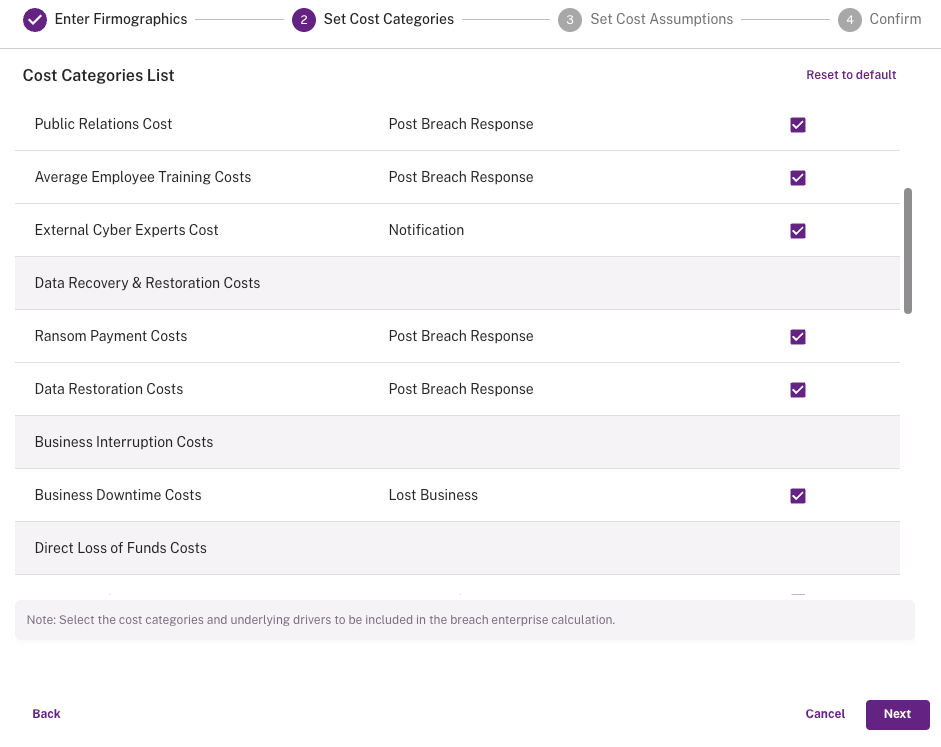
Organizations can select which cost categories to include in the breach model. The model includes a range of post-breach cost categories such as notification, credit monitoring, forensic investigation, PR, and training etc. These ensure that both regulatory obligations and operational recovery efforts are captured when estimating breach impact.
Step 3: Set Cost Assumptions
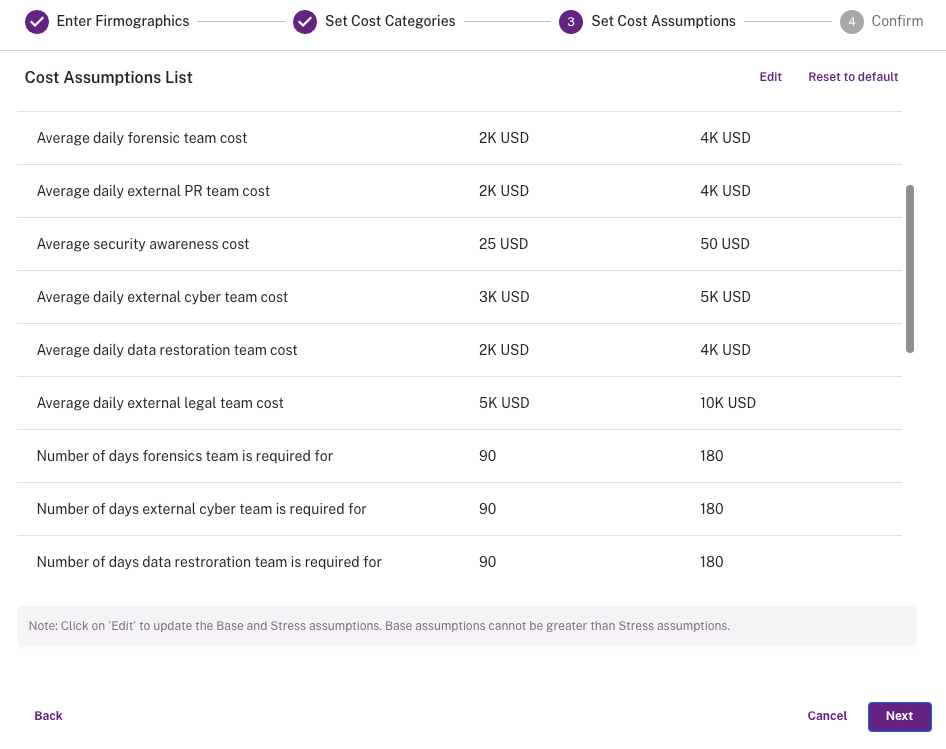
This step defines Base Case and Stress Case cost assumptions for each selected category.
Base assumptions represent normal expected costs.
Stress assumptions represent worst-case scenarios (cannot be lower than base).
How Cost Assumptions Are Derived
To ensure credibility, cost assumptions have been set by reviewing multiple sources of data, including:
Balbix’s historical loss model – aggregated breach cost data across industries and geographies
Open source data – industry reports, regulator disclosures, and publicly available breach studies.
SME input – validation and tuning by subject matter experts with real-world incident response experience.
Step 4: Confirm Impact
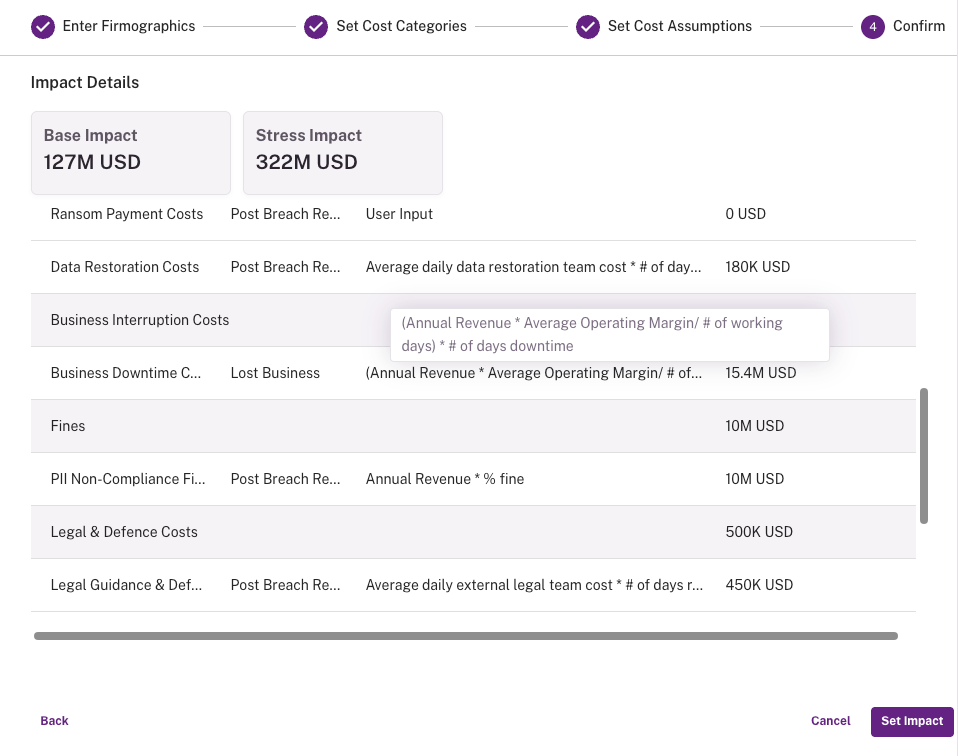
The final impact summary combines firmographics and cost assumptions into estimated base and stress financial impacts. This breakdown shows how specific categories (e.g., customer notifications, monitoring, PR, forensics) contribute to the overall breach cost profile.
Impact Summary
Base Impact: $127M USD
Stress Impact: $322M USD
Conclusion
This workflow provides organizations with a structured, transparent model to estimate cyber breach financial impact. By tailoring inputs such as firmographics, cost categories, and assumptions, and grounding assumptions in multiple validated data sources, organizations can align breach cost estimates with their specific risk profile.