Overview
The Control Center is a centralized workspace within SAFE One that enables organizations to manage, assess, and monitor cybersecurity controls based on the SAFE Cyber Security Controls Framework built on the FAIR-CAM methodology.
It provides a structured, risk-driven view of security controls, their maturity, and their impact on cyber risk reduction. By combining control assessment with real-time insights, the Control Center helps teams understand their current security posture, prioritize improvements, and track operational progress.
Control Maturity Insights
At the top of the Control Center, the Control Maturity Insights section delivers an immediate snapshot of organizational security effectiveness by combining maturity scoring, assessment status, and distribution analysis into a single view.
The Control Insights presents a high-level summary of control effectiveness and maturity:
Aggregate Maturity
Represents the overall maturity level across all evaluated controls, calculated based on capability, coverage, and reliability dimensions. This metric helps stakeholders quickly understand the organization’s current cyber defense strength.
Assessed Controls
Indicates how many controls have been evaluated against maturity criteria. High assessment coverage improves model confidence and risk accuracy.
Automated Controls
Shows the number of controls whose maturity evaluation is driven by automated integrations or telemetry, improving objectivity and reducing manual effort.
Maturity Distribution
This distribution helps teams identify:
Controls requiring immediate attention (low maturity)
Controls needing optimization (mid-range maturity)
Strong controls already delivering risk reduction (high maturity)
Together, these insights allow organizations to prioritize improvements based on measurable maturity gaps rather than subjective assessments.
.png)
Centralized Control Management
The Control Center enables teams to:
View and manage all cybersecurity controls within the SAFE framework
Assess maturity across multiple dimensions
Monitor implementation status and operational effectiveness
Track findings impacting control reliability
.png)
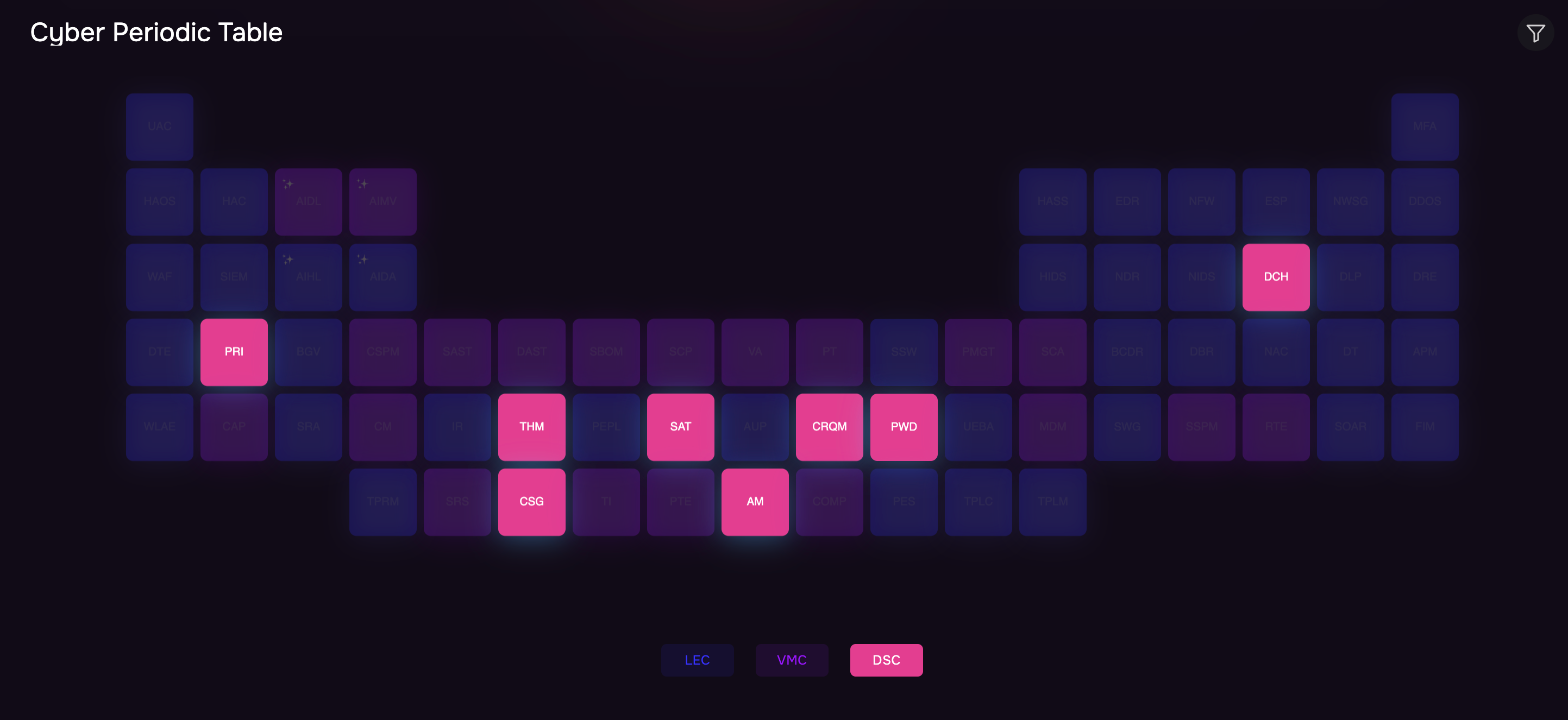
Cyber Periodic Table
The Cyber Periodic Table visually organizes controls within the SAFE framework:
Each tile represents a specific cybersecurity control.
Color coding identifies control categories and classifications.
Allows quick visual assessment of maturity and distribution.
Helps teams explore relationships between control types.
.png)
Control Maturity Model
Control maturity represents the effectiveness and operational strength of controls and is evaluated using three key dimensions:
Capability
Capability measures how effectively a control performs when implemented.
Typical maturity levels include:
M0 – Not Implemented
M1 – Foundational
M2 – Advanced
M3 – Expert
Higher capability indicates stronger technical implementation.
Coverage
Coverage measures how broadly the control is deployed across applicable assets and environments.
Higher coverage maturity reflects broader protection across the attack surface.
Reliability
Reliability measures how consistently controls perform over time.
Factors influencing reliability include:
Findings impacting control effectiveness
Monitoring practices
Operational validation processes
Higher reliability ensures controls remain effective under real-world conditions.
.png)
Control Types in SAFE (FAIR-CAM Classification)
SAFE categorizes controls into three functional types based on how they influence cyber risk.
LEC (Loss Event Controls)
Loss Event Controls directly influence the likelihood or impact of cyber loss events.
These controls:
Reduce attack success probability
Detect malicious activity
Contain or mitigate damage
Examples:
MFA
EDR
Logging and monitoring
Backup and recovery
LECs directly impact susceptibility and loss event frequency within the FAIR-CAM model.
.png)
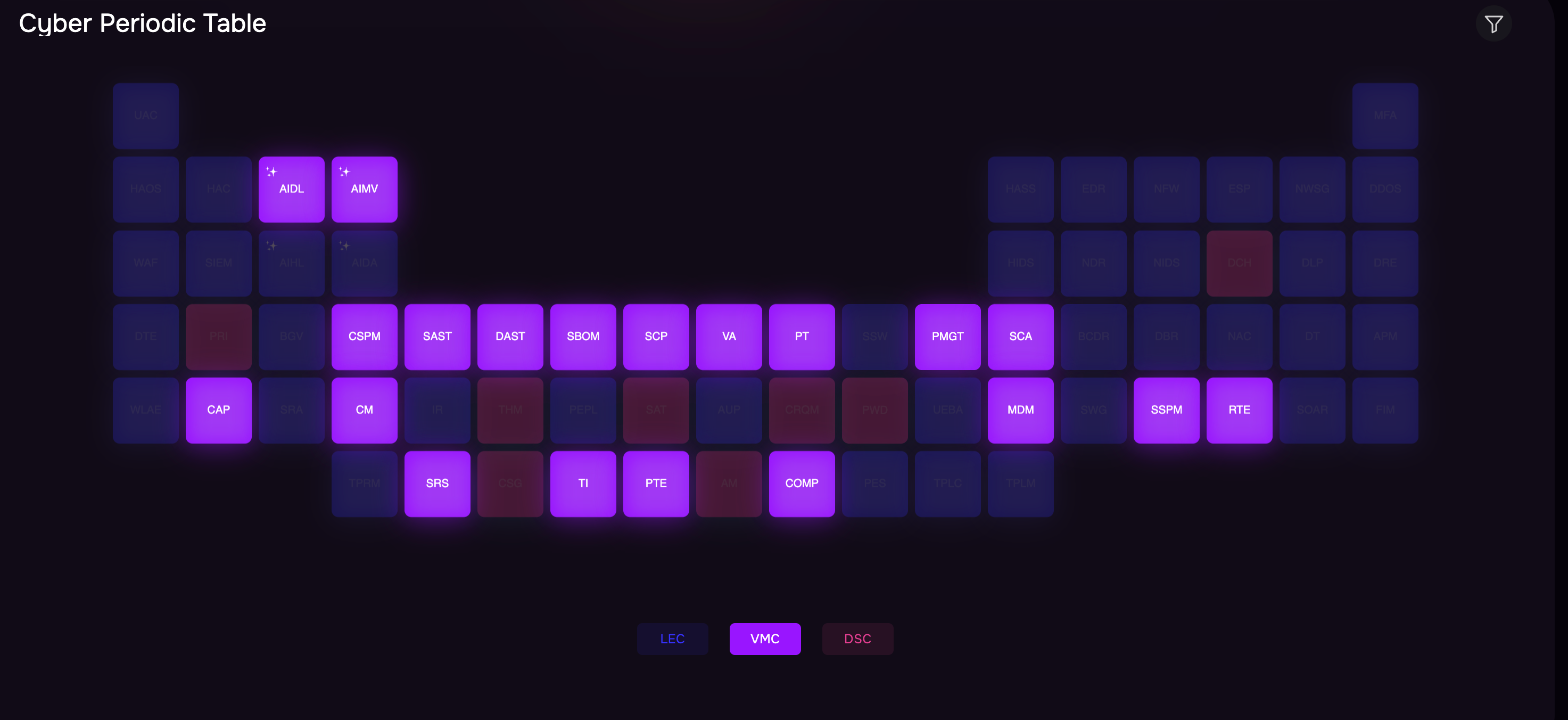
VMC (Variance Management Controls)
Variance Management Controls improve the consistency and reliability of other controls.
They:
Reduce operational variability
Strengthen governance
Enhance control reliability
VMCs indirectly reduce risk by improving the performance of Loss Event Controls.
DSC (Decision Support Controls)
Decision Support Controls enhance decision-making and risk prioritization.
They help organizations:
Make informed security decisions
Improve governance strategy
Prioritize remediation effectively
DSCs indirectly influence risk through better strategic and operational choices.