Overview
Balbix transforms raw security data into actionable insights using its AI-driven platform. The data lifecycle focuses on ingesting data from various sources, enriching it with context, and processing it to help organizations understand and mitigate risk. This document outlines the complete lifecycle—from data onboarding to actionable insights—highlighting how Balbix enables continuous visibility and prioritization of cybersecurity efforts.
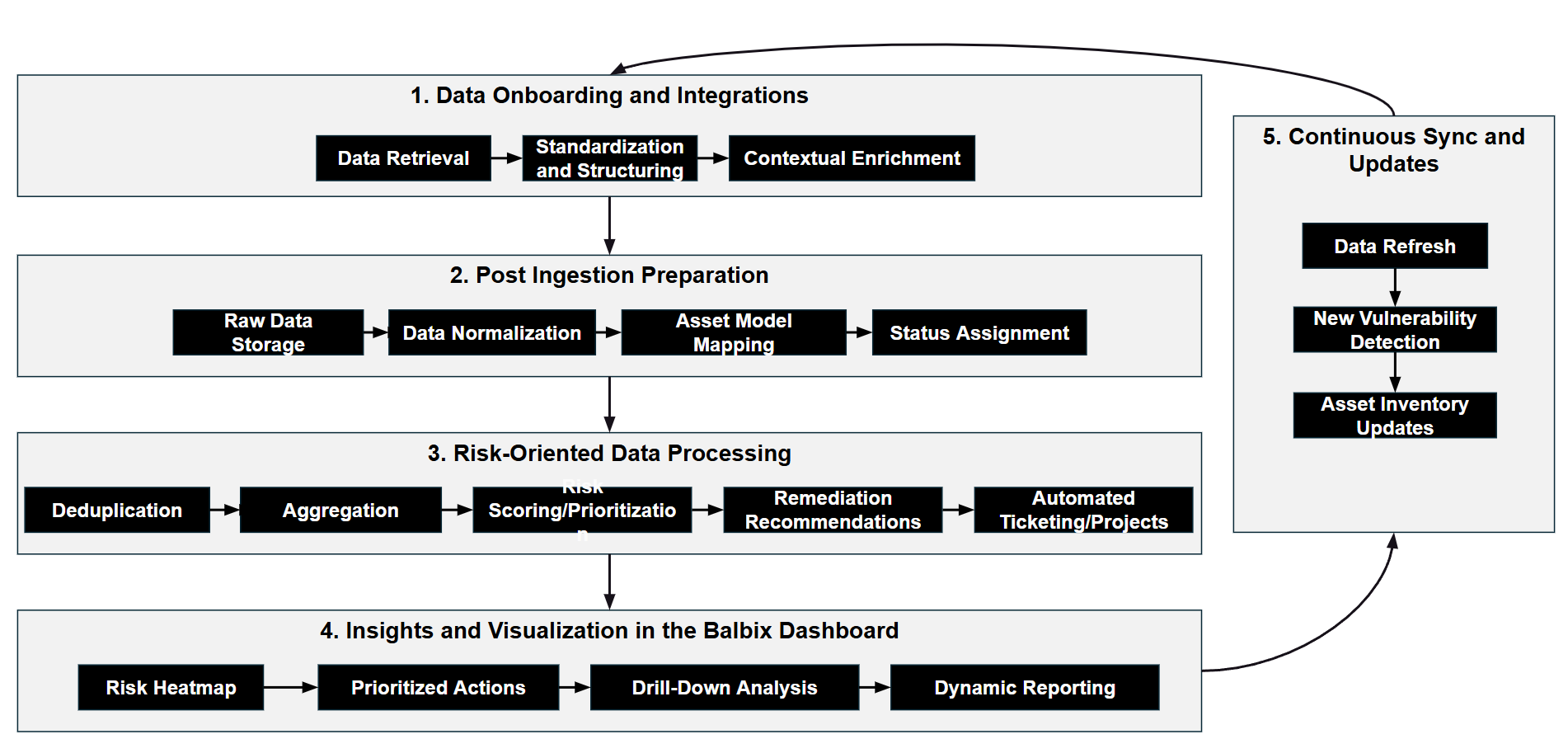
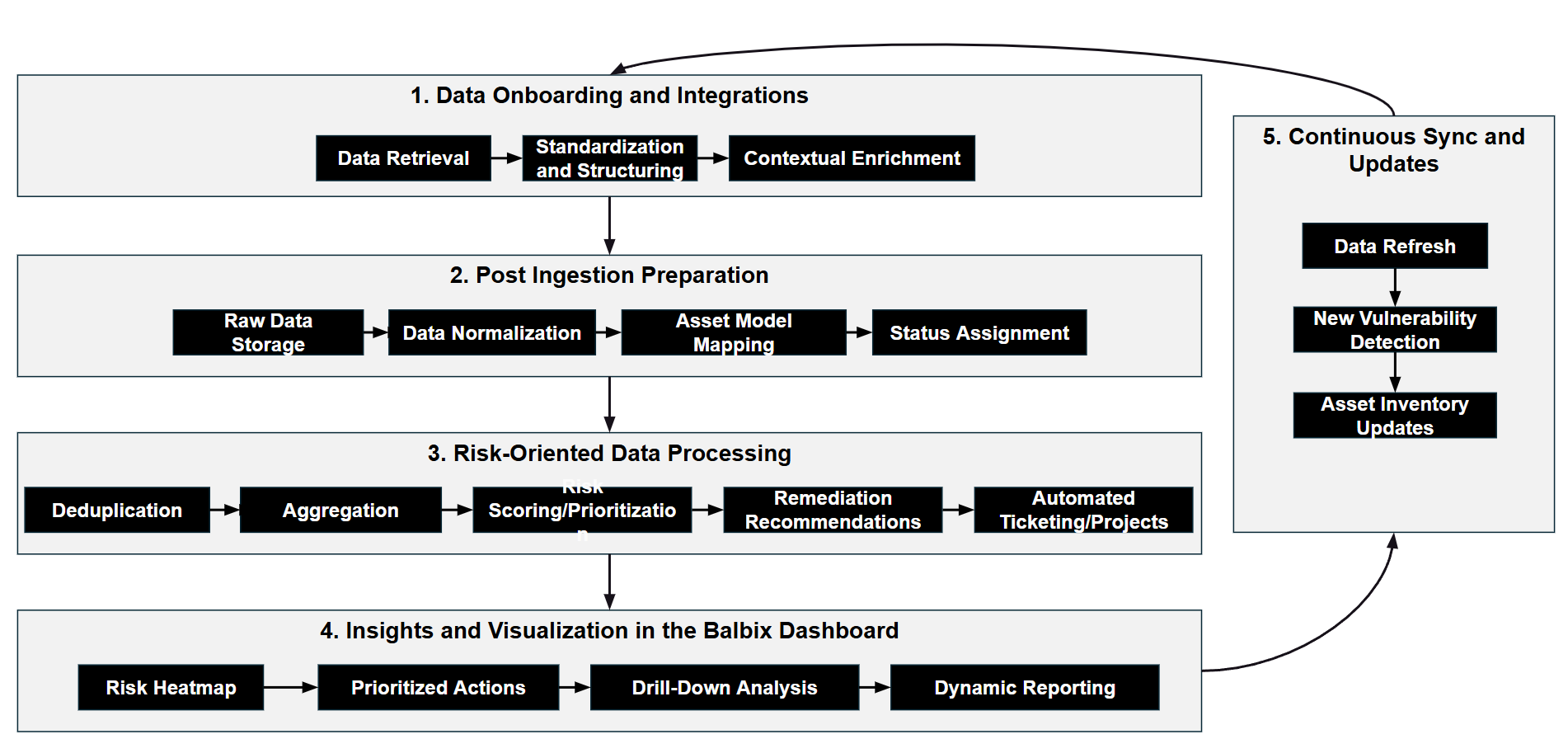
1. Data Onboarding and Integration
The lifecycle begins with integrating and onboarding data from various connected systems such as vulnerability scanners, cloud platforms, and endpoint management tools. This foundational stage ensures that all relevant information, such as assets, vulnerabilities, and configurations, is securely ingested and contextualized within Balbix’s unified asset model.
Key Steps
Data Retrieval:
Balbix connects to external platforms via pre-configured APIs to fetch raw data. Examples of collected data include:Assets: Hardware, software, cloud resources, IoT devices, and endpoints.
Vulnerabilities: Known vulnerabilities detected by scanners or security tools.
Configuration Data: Misconfigurations and policy violations impacting security posture.
Standardization and Structuring:
Balbix normalizes diverse formats of incoming data to its standardized format, ensuring compatibility with its analytical models.Contextual Enrichment:
Balbix establishes relationships between assets, vulnerabilities, and configurations, enriching data with business context for actionable insights.
2. Post-Ingestion Preparation
After ingestion, the data undergoes preparation to ensure accuracy, consistency, and alignment with Balbix’s data model. This stage sets the foundation for advanced analysis and prioritization.
Steps in Preparation
Raw Data Storage:
Raw ingested data is securely stored for reference and transparency.Data Normalization:
Data is cleaned, deduplicated, and structured to match Balbix’s unified schema.Asset Model Mapping:
Balbix maps ingested data to its comprehensive asset model, linking vulnerabilities and configurations to the relevant assets.Status Assignment:
Once prepared, the data is marked as "Ready for Processing," signaling its availability for analysis.
3. Risk-Oriented Data Processing
In this stage, Balbix refines the ingested data into actionable insights that prioritize risk mitigation.
Processing Steps
Deduplication:
Balbix identifies and removes duplicate entries to maintain accurate and clean datasets.Aggregation:
Data is summarized to provide high-level insights, such as risk scores for assets, groups, or organizational units.Risk Scoring and Prioritization:
Balbix assigns risk scores to vulnerabilities, configurations, and assets based on:Exploitability and likelihood of occurrence.
Business impact, considering asset criticality and sensitivity.
Compliance requirements and SLAs.
Remediation Recommendations:
Balbix generates prioritized, actionable recommendations, integrating them into existing workflows.Automated Ticketing and Projects:
Automated Ticketing: Balbix integrates with IT service management tools (e.g., Jira, ServiceNow) to create remediation tickets automatically. These tickets are prioritized by risk score and assigned to relevant teams.
Balbix Projects: For broader remediation efforts, Balbix enables users to create and manage projects that focus on reducing risk for specific asset groups, vulnerabilities, or compliance areas.
4. Insights and Visualization in the Balbix Dashboard
Once processed, data is presented in the Balbix platform, giving users a clear, real-time view of their cybersecurity posture.
Key Features
Risk Heatmap:
A visual representation of risk levels across assets, business units, or geographies, enabling quick identification of critical areas.Prioritized Actions:
Displays top remediation actions, ranked by business impact and risk reduction.Drill-Down Analysis:
Users can explore detailed insights on individual assets, vulnerabilities, or misconfigurations.Dynamic Reporting:
Balbix provides customizable reports tailored to executive, operational, or compliance audiences.
5. Continuous Sync and Updates
Balbix ensures the platform remains up-to-date by continuously syncing with connected tools. This process ensures that any changes in assets, vulnerabilities, or configurations are reflected in near real-time.
Daily Sync Highlights
Data Refresh:
Balbix queries connected platforms daily (or at configured intervals) to fetch the latest data.New Vulnerability Detection:
New vulnerabilities are identified and prioritized based on their potential impact.Asset Inventory Updates:
Newly added or modified assets are incorporated into Balbix’s risk model.
Connector-Specific Mechanisms
Each connector has a predefined sync mechanism tailored to its source platform, ensuring seamless updates and data consistency. Users can refer to the Balbix Connector Guide for detailed information.
Conclusion
Balbix’s data lifecycle is designed to provide organizations with a unified, real-time view of their security posture. By ingesting, processing, and continuously updating data, Balbix enables informed decision-making and proactive risk mitigation. Automated ticketing and Balbix projects further streamline remediation, ensuring efficient resource allocation and faster resolution of critical risks.